How does daily learning become a habit?
A behavior-centered exploration of how cognitive load, motivation, friction, and feedback influence people's ability to develop consistent self-directed learning habits.
The Problem
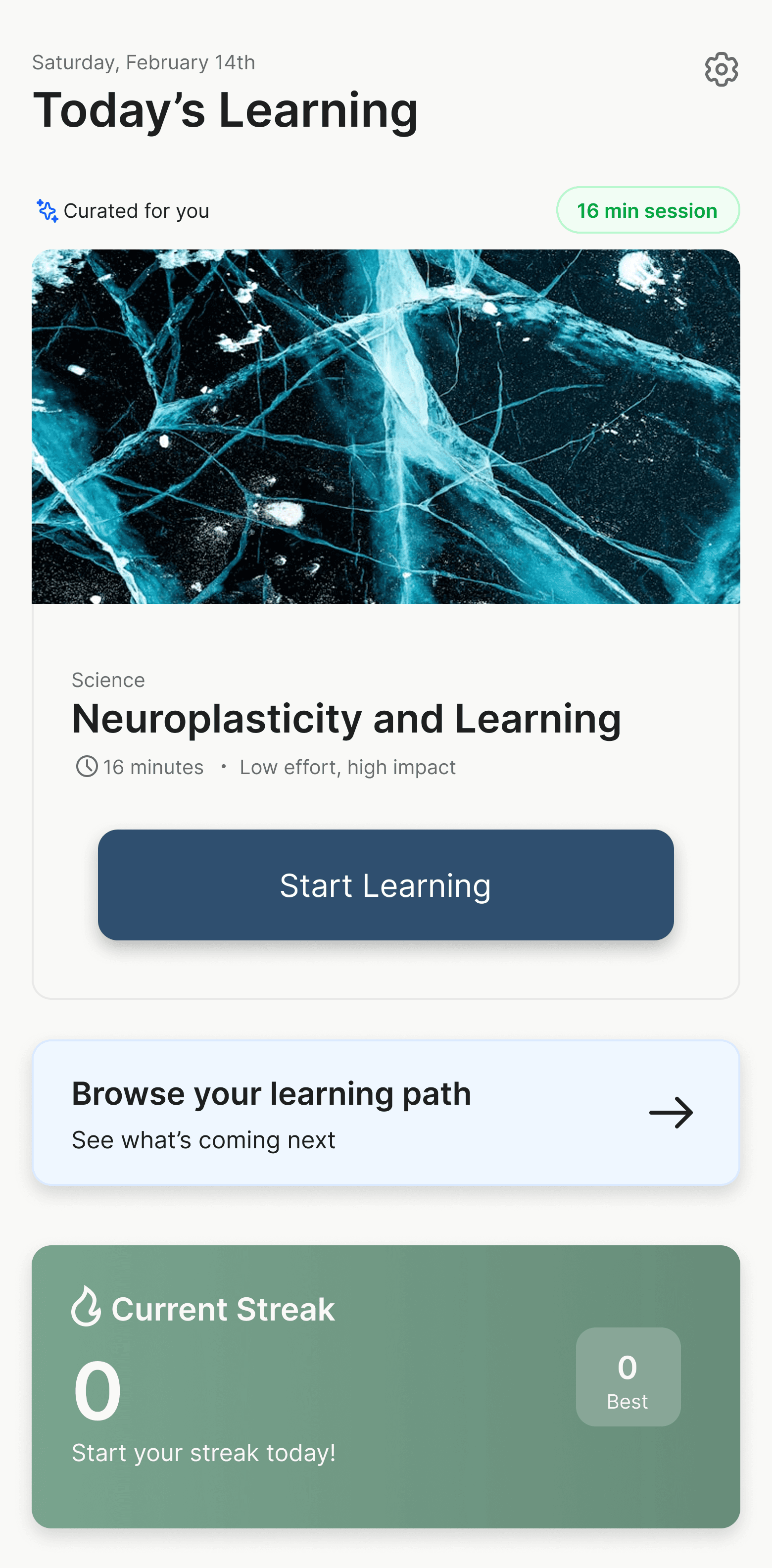
Digital platforms have made learning more accessible than ever, yet sustaining a daily learning practice remains a challenge. While information is abundant, consistency is much harder to design for.
Despite strong intentions, many people struggle to turn learning into a daily habit. Busy schedules, mental fatigue, and an overwhelming amount of content often get in the way.
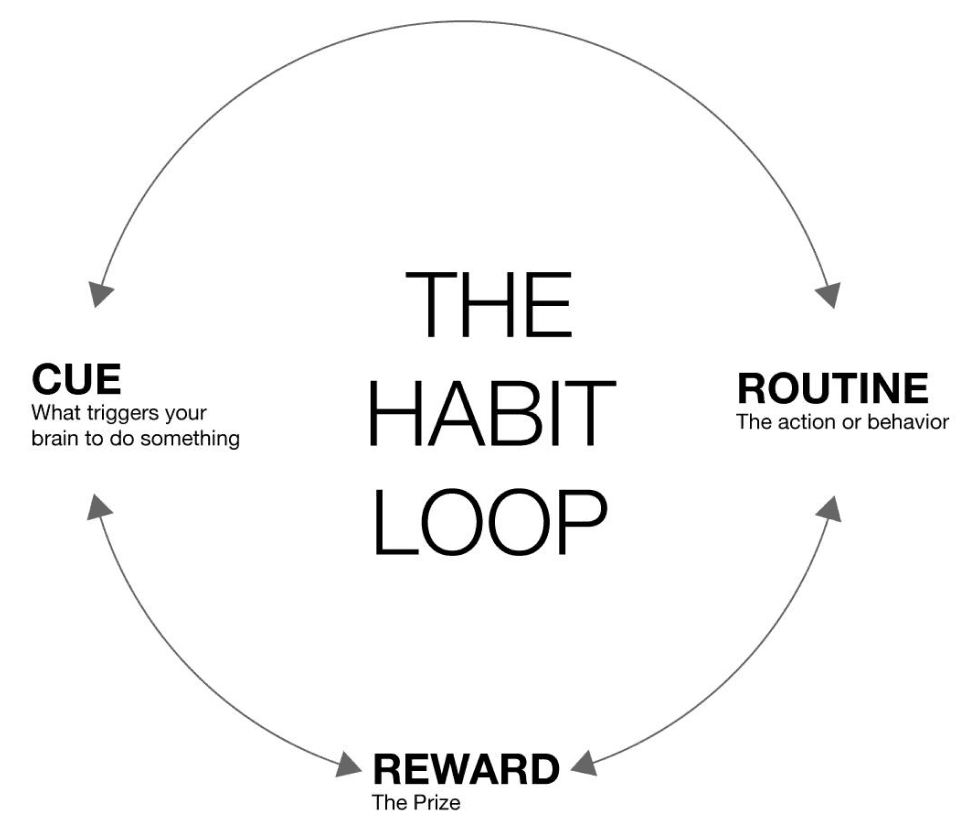
The habit loop (cue, routine, reward) became a useful framework for thinking about why learning is often difficult to sustain.
Most learning platforms focus on providing information, but few are designed to reinforce the behaviors that make people return consistently. The challenge is not access to learning. It’s returning to it.
The Hypothesis
This project explored whether designing around human behavior, particularly habit formation, cognitive load, and motivation, could make learning easier to return to over time. Rather than asking how to motivate people to learn more, the goal was to understand how digital experiences could reduce friction and support consistent learning behaviors.
The hypothesis was that learning would become easier to sustain when experiences emphasized small, low-effort actions, reduced cognitive load, and made progress visible. Together, these design principles could help transform learning from an occasional intention into a daily habit.
Understanding Learning Habits
To better understand why learning habits are difficult to sustain, research explored how people approach self-directed learning, what motivates them to continue, and where they experience the most friction. Interviews with students and young professionals revealed that the challenge was rarely a lack of motivation. Instead, it was the accumulation of small barriers that made returning to learning difficult.
Behavioral Insights
Progress feels invisible
Without clear feedback, effort does not feel meaningful or motivating.
Emotional barriers reduce consistency
Breaking a streak reinforces the belief that they cannot stick with things.
Key Takeaway
The issue is not motivation. It’s reducing friction.
Participants consistently expressed a desire to learn. The difficulty wasn't a lack of motivation, but the effort required to begin, decide what to learn, and maintain momentum over time. The opportunity became designing an experience that reduced cognitive load, simplified decision-making, and reinforced progress through meaningful feedback.
From Insight to Design
These findings shifted the focus from increasing motivation to reducing friction. Rather than asking how to encourage people to learn more, the question became: How might a digital experience make learning easier to return to? The following design principles emerged directly from these behavioral insights.
Designing for Consistent Learning
Design direction
The research shifted the focus from motivating people to learn toward making learning easier to return to. Rather than encouraging long study sessions, the experience was designed to reduce friction, simplify decision-making, and support consistent learning behaviors through small, repeatable interactions.
Design principles
Prioritize consistency over intensity.
Encourage frequent, manageable learning moments rather than long, infrequent sessions.
Make progress visible.
Provide meaningful feedback that reinforces effort and helps learners recognize their growth over time.
Support return without guilt.
Create an experience that welcomes learners back after missed sessions instead of reinforcing failure.
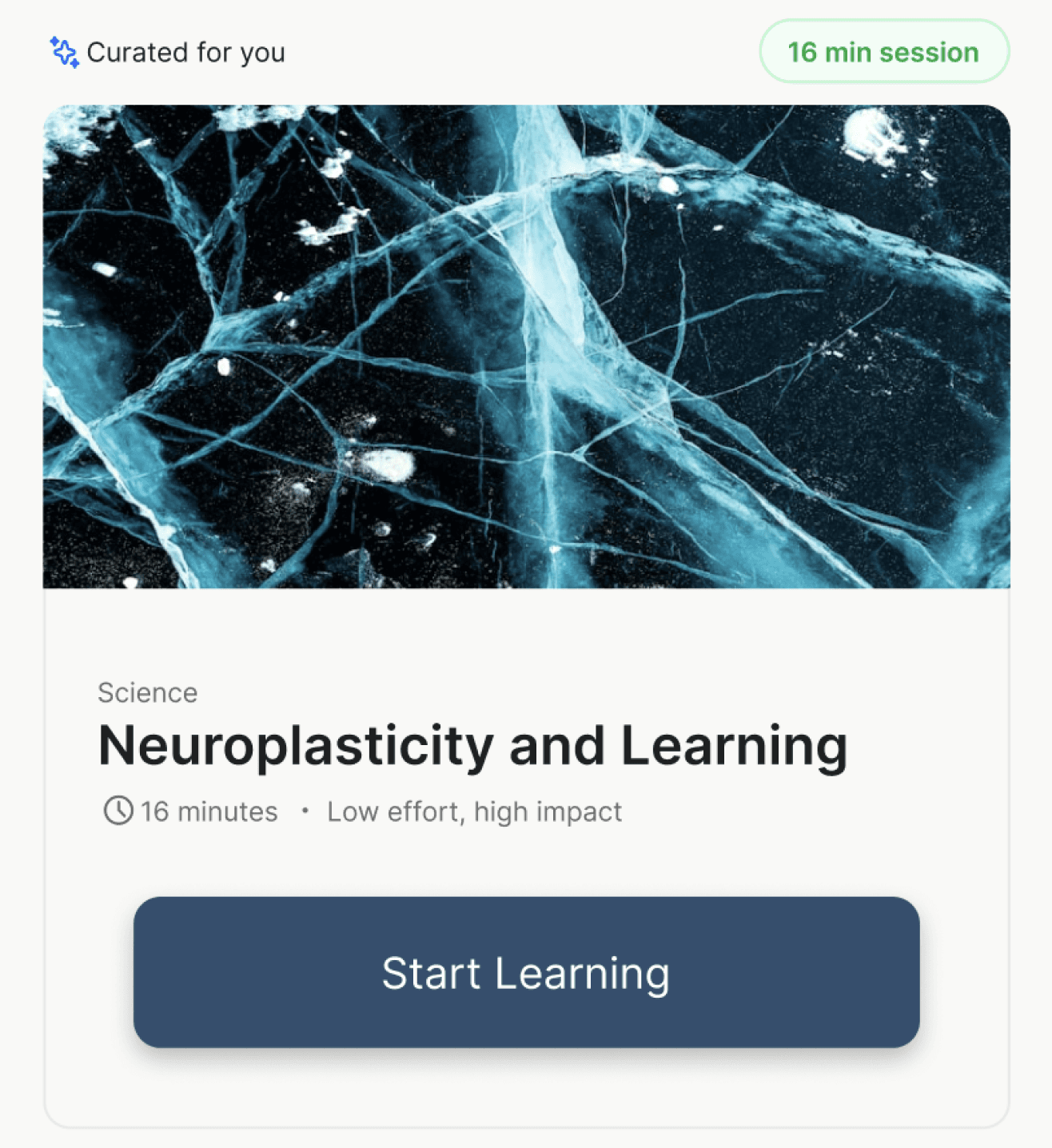
Each learning session was intentionally short and clearly defined, making it easier to begin without feeling overwhelmed.
Putting the Principles into Practice
Short learning sessions
Sessions between 5 and 20 minutes reduce the effort required to begin, making learning easier to fit into everyday routines.
Guided learning paths
Structured learning paths remove the burden of deciding what to learn next, reducing cognitive load while preserving learner autonomy.
Meaningful progress
Progress indicators reinforce consistency by making effort visible over time, encouraging learners to return without relying solely on streaks or reminders.
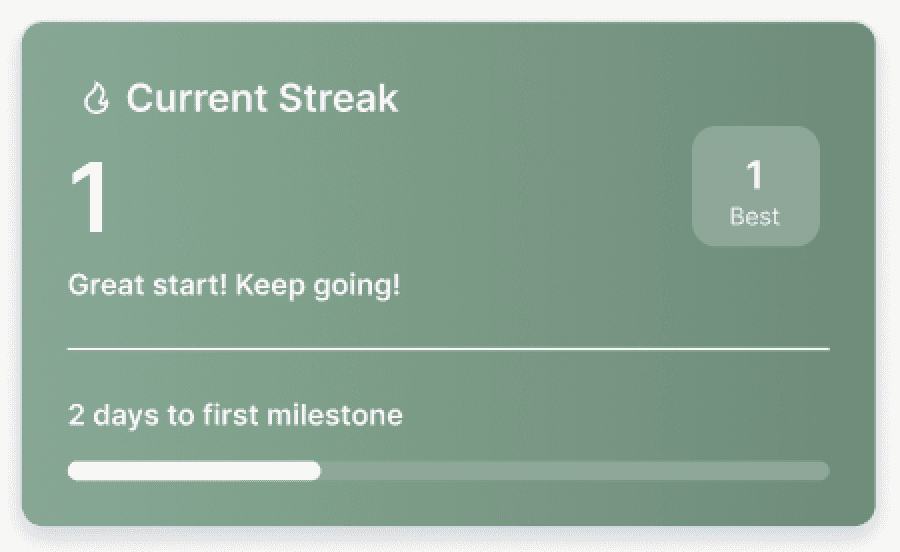
Progress was designed to reinforce consistency rather than perfection. Missing a day doesn't erase progress. Instead, the system emphasizes returning to learning over maintaining an uninterrupted streak.
Testing and iteration
Concepts were tested around perceived effort, clarity, and motivation.
Early feedback showed that users were more likely to engage when sessions felt quick and achievable, and when progress was clearly communicated. Rigid streak systems created pressure rather than encouragement.
Iterations focused on reducing friction to start a session, making progress feel meaningful, and encouraging consistency without guilt.
Metrics for success
Success was defined through consistency rather than intensity:
70% daily completion rate
40% 7-day streak rate
30% 30-day retention
85% session completion
60 minutes average weekly learning time
50% streak recovery rate
These metrics reflect sustained engagement rather than one-time usage.
Reflection
This project shifted how I think about motivation.
What initially seemed like a problem of discipline revealed itself as a problem of energy and structure. Most people already want to learn. They lack systems that support consistency.
Designing for habit formation required focusing less on features and more on behavior. Small decisions such as limiting sessions or visualizing weekly progress had a greater impact than adding more content.
If I continued this project, I would explore how different types of feedback influence long-term engagement. I am especially interested in how to encourage consistency without creating pressure or guilt.
Purpose-driven at heart, I build products part of something greater ✩₊˚.⋆☾⋆⁺₊✧