Originally completed in 2023, this case study has been reimagined to reflect my current thinking and design approach in 2026.
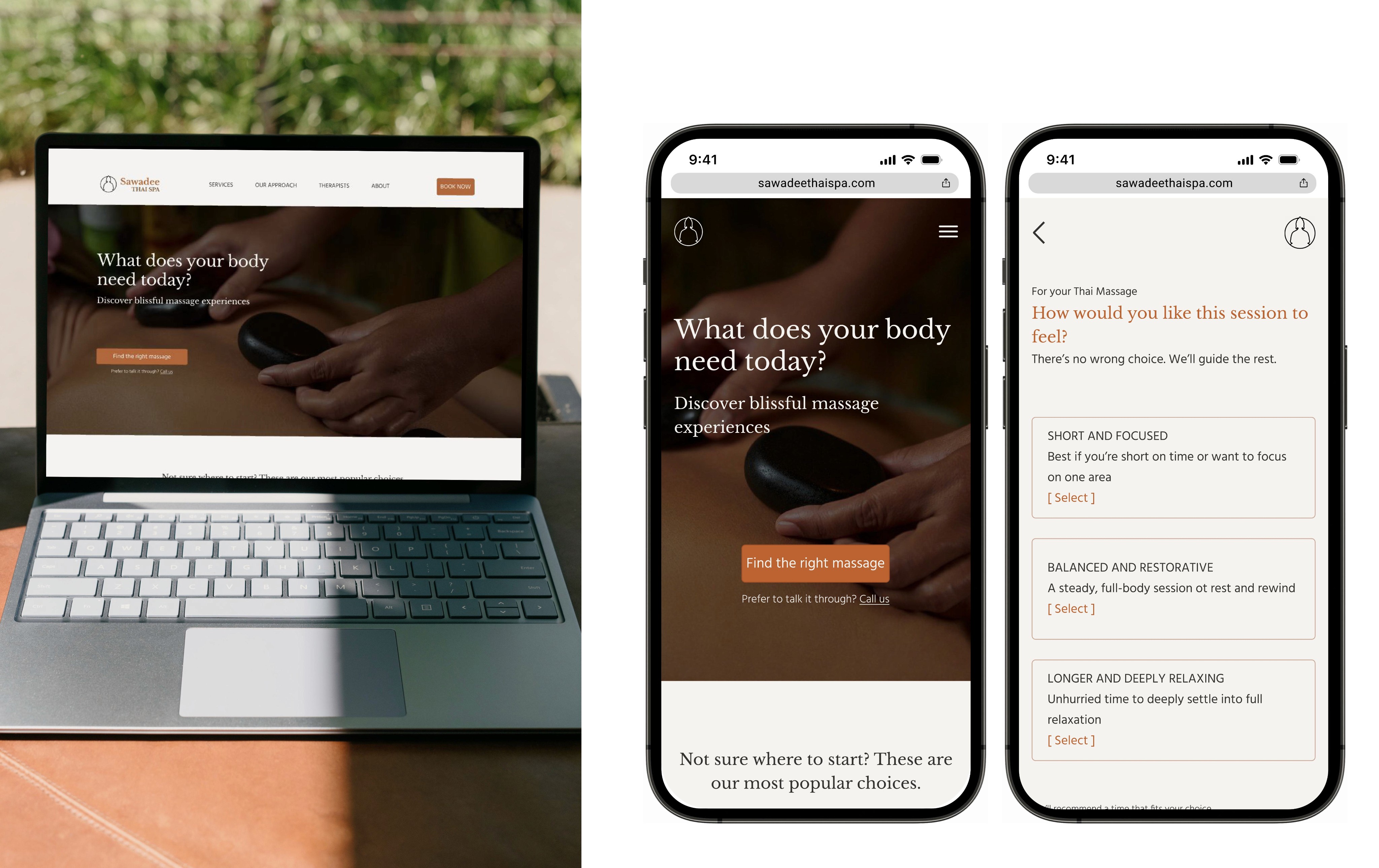
I identified the shift from phone-based scheduling to digital self-service as a moment where additional steps can increase cognitive load, and designed Sawadee Thai Spa’s first online booking experience to translate human support into a calm, confidence-building, uninterrupted flow.
Context
Sawadee Thai Spa relied entirely on phone calls to manage appointments, with no way for customers to book or explore services online.
Problem
Most booking systems assume users already know what to book, and overlook the uncertainty and reassurance first-time customers need when choosing a service without human guidance.
Existing booking tools digitize the transaction but ignore the human guidance customers rely on to choose confidently.
Solution
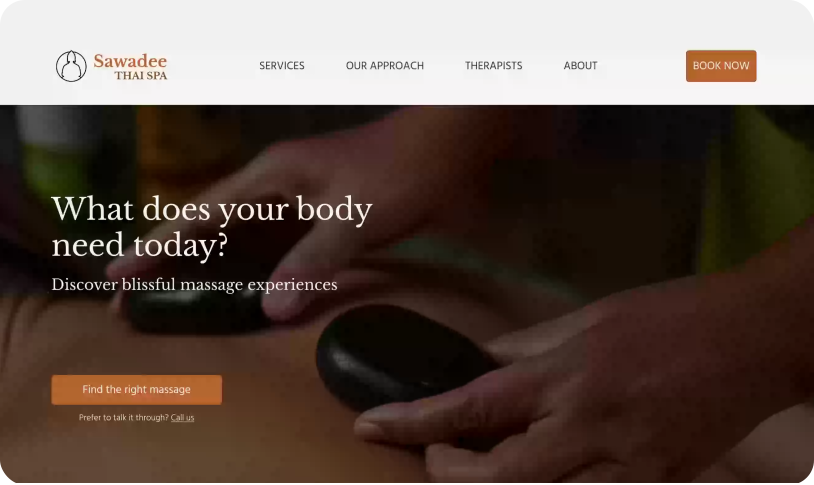
I designed Sawadee Thai Spa’s first online booking experience to translate phone-based human support into a calm, confidence-building self-service flow.
Sawadee Thai Spa managed all appointments by phone. While personal, the process created friction: customers had to call during opening hours, staff were interrupted during treatments, and simple booking questions took time away from service delivery.
Why Change Was Needed
As demand grew, the phone-based system became increasingly inefficient. What once felt personal began to create unnecessary effort for both customers and staff, limiting flexibility and scalability for a small business.
Defining Success
User Success
Can confidently book without calling
Understands service options well enough to decide independently
Business Success
Fewer interruptions during treatments
More predictable scheduling
Reduced reliance on phone calls
Constraints and Risks
Customers booking online for the first time
Users accustomed to personal, human interaction
The spa’s warm, local feel needed to be preserved
Limited technical infrastructure and budget
Because this was the spa’s first online booking system, the experience needed to feel supportive rather than transactional, mirroring the reassurance usually provided over the phone.
Confidence doesn’t appear instantly. It’s built through guidance.
User conversations revealed that customers relied heavily on staff explanations when booking by phone. I designed the online booking experience to gradually replace that guidance through clear service descriptions, pacing, and reassuring microcopy.

Guidance embedded in the interface
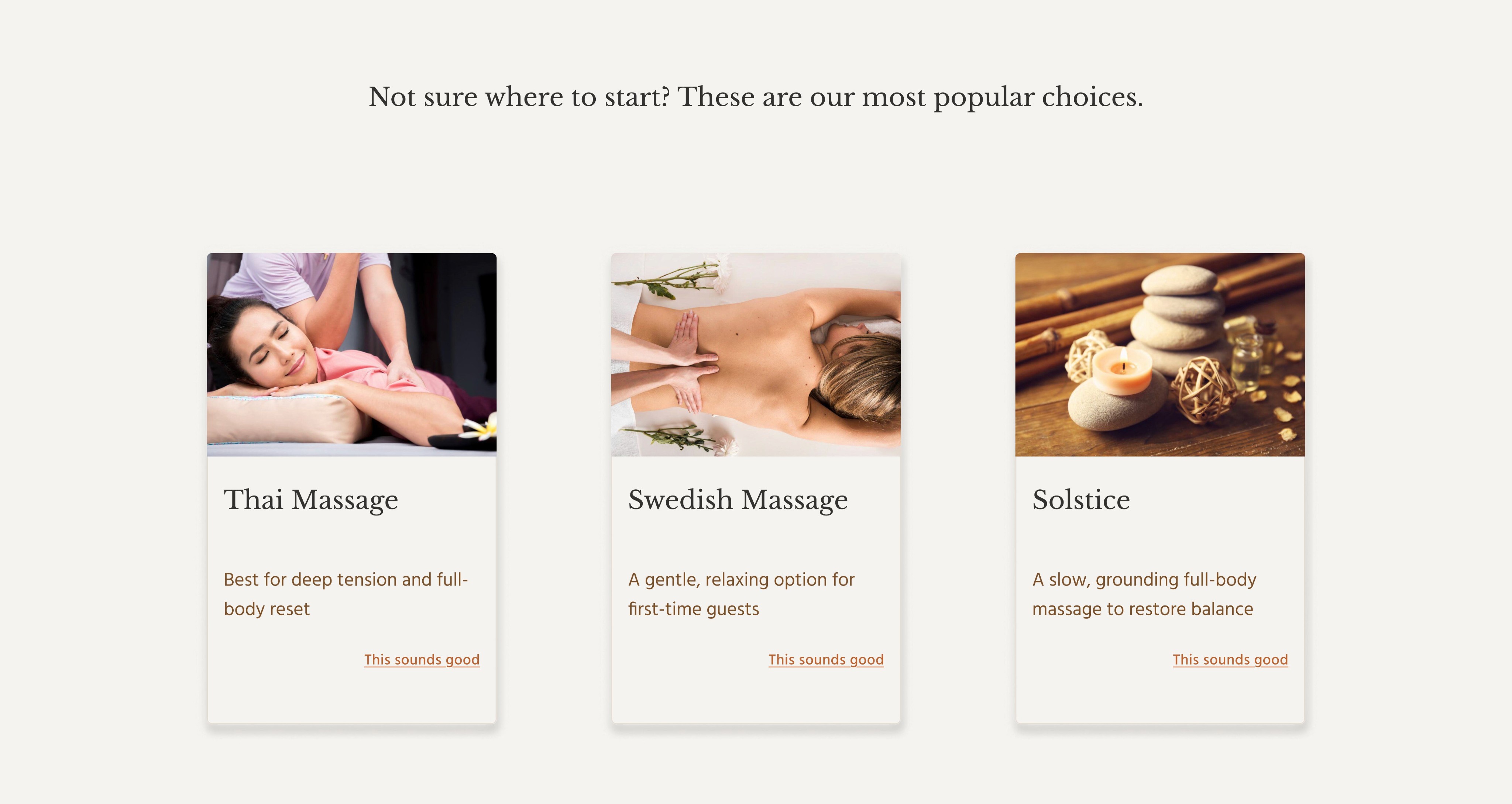
Choosing a service requires reassurance, not just availability. I designed the booking experience to translate staff explanations into clear service groupings, progressive detail, and supportive language, helping users decide confidently without calling.
Booking is a Conversation, Not a Form
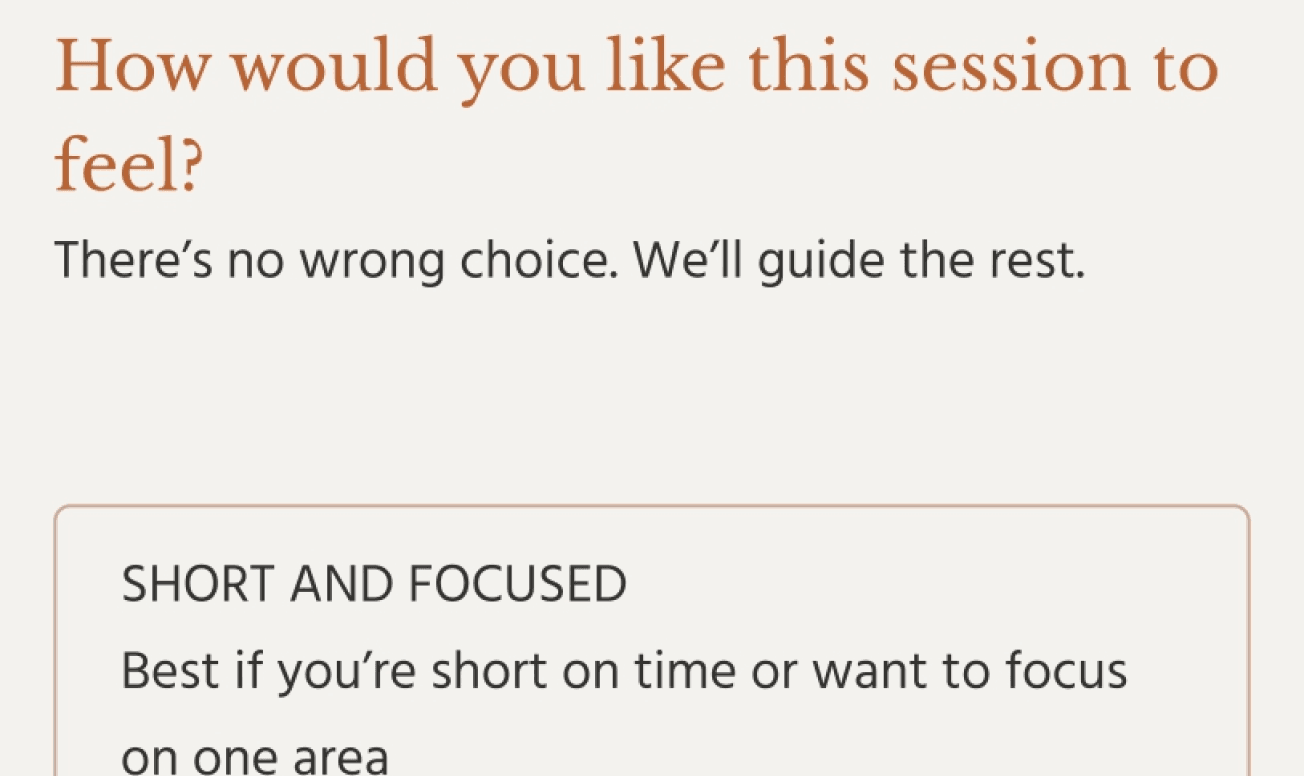
First-time customers have questions, hesitations, and unspoken needs. The booking experience anticipates those moments by guiding decisions step by step: using language, pacing, and structure to respond like a calm, knowledgeable staff member would.
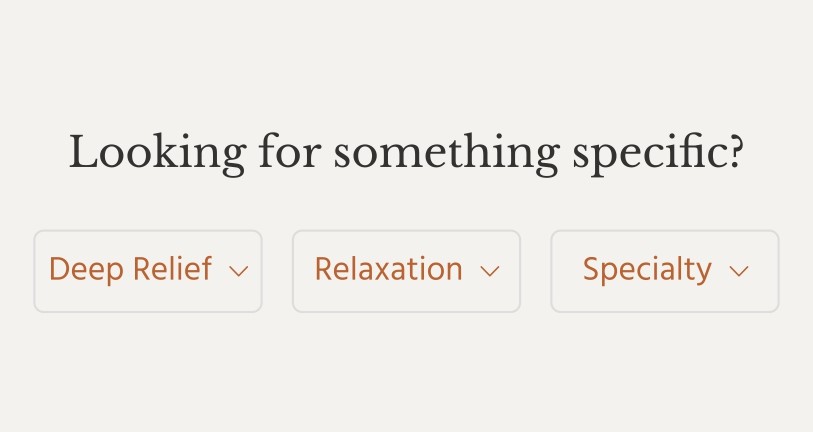
Translating Human Support into UI
What staff previously explained verbally had to be embedded into the interface.
Thoughtful service grouping
Calm, reassuring language tone
Step-by-step pacing through the booking flow
Supportive microcopy at key decision points
This positioned UX as translation of human support, not just visual design.
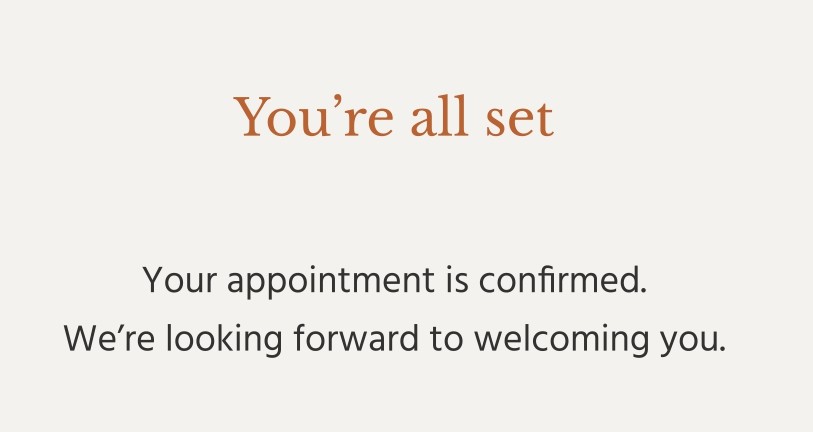
Design Decisions and Iteration
Design choices prioritized clarity and confidence over speed:
Progressive disclosure to avoid overwhelming users
Language that mirrored in-person explanations
A booking rhythm that felt calm and deliberate
Iterations focused on reducing hesitation rather than shortening the flow at all costs.
Outcome
The solution enabled confident self-service booking, reduced reliance on phone calls, and created a scalable scheduling system while preserving the spa’s calm, personal tone.
Key Learnings
Designing a first-time system requires more emotional reassurance than optimization work. This project highlighted how much trust is built through clarity, pacing, and language, not just layout or interaction patterns.
Designing Trust in First-Time Online Booking
Purpose-driven at heart,
I build products part of something greater.
Let’s Talk
Resume
Barcelona
Outcome
The solution enabled confident self-service booking, reduced reliance on phone calls, and created a scalable scheduling system while preserving the spa’s calm, personal tone.
Translating Human Support into UI
What staff previously explained verbally had to be embedded into the interface.
Thoughtful service grouping
Calm, reassuring language tone
Step-by-step pacing through the booking flow
Supportive microcopy at key decision points
This positioned UX as translation of human support, not just visual design.
Design Decisions and Iteration
Design choices prioritized clarity and confidence over speed:
Progressive disclosure to avoid overwhelming users
Language that mirrored in-person explanations
A booking rhythm that felt calm and deliberate
Iterations focused on reducing hesitation rather than shortening the flow at all costs.
Booking is a Conversation, Not a Form
First-time customers have questions, hesitations, and unspoken needs. The booking experience anticipates those moments by guiding decisions step by step: using language, pacing, and structure to respond like a calm, knowledgeable staff member would.
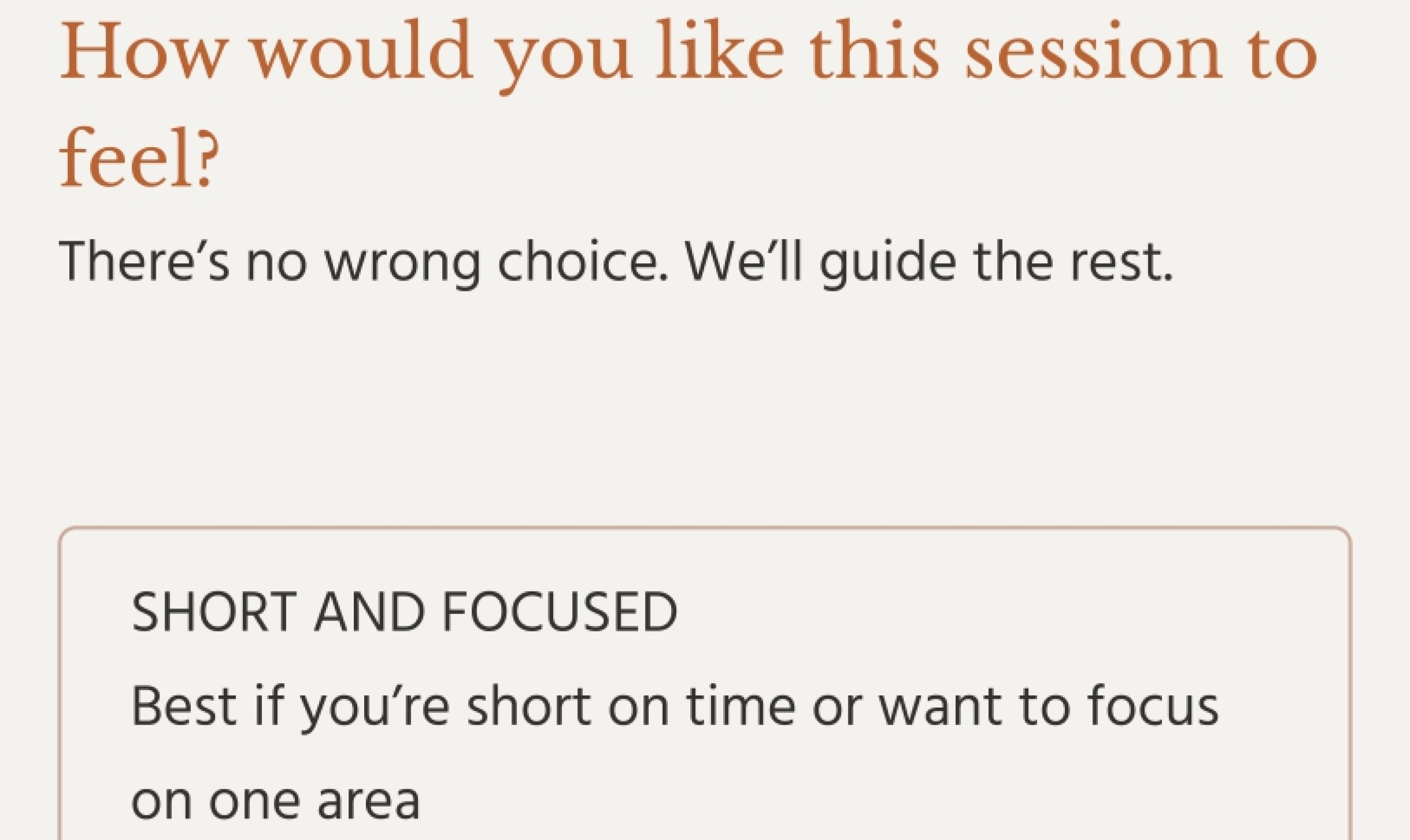
Guidance embedded in the interface
Choosing a service requires reassurance, not just availability. I designed the booking experience to translate staff explanations into clear service groupings, progressive detail, and supportive language, helping users decide confidently without calling.

Confidence doesn’t appear instantly. It’s built through guidance.
User conversations revealed that customers relied heavily on staff explanations when booking by phone. I designed the online booking experience to gradually replace that guidance through clear service descriptions, pacing, and reassuring microcopy.
Sawadee Thai Spa managed all appointments by phone. While personal, the process created friction: customers had to call during opening hours, staff were interrupted during treatments, and simple booking questions took time away from service delivery.
Why Change Was Needed
As demand grew, the phone-based system became increasingly inefficient. What once felt personal began to create unnecessary effort for both customers and staff, limiting flexibility and scalability for a small business.
Defining Success
User Success
Can confidently book without calling
Understands service options well enough to decide independently
Business Success
Fewer interruptions during treatments
More predictable scheduling
Reduced reliance on phone calls
Constraints and Risks
Customers booking online for the first time
Users accustomed to personal, human interaction
The spa’s warm, local feel needed to be preserved
Limited technical infrastructure and budget
Because this was the spa’s first online booking system, the experience needed to feel supportive rather than transactional, mirroring the reassurance usually provided over the phone.
Context
Sawadee Thai Spa relied entirely on phone calls to manage appointments, with no way for customers to book or explore services online.
Problem
Most booking systems assume users already know what to book, and overlook the uncertainty and reassurance first-time customers need when choosing a service without human guidance.
Existing booking tools digitize the transaction but ignore the human guidance customers rely on to
choose confidently.
Solution
I designed Sawadee Thai Spa’s first online booking experience to translate phone-based human support into a calm, confidence-building self-service flow.

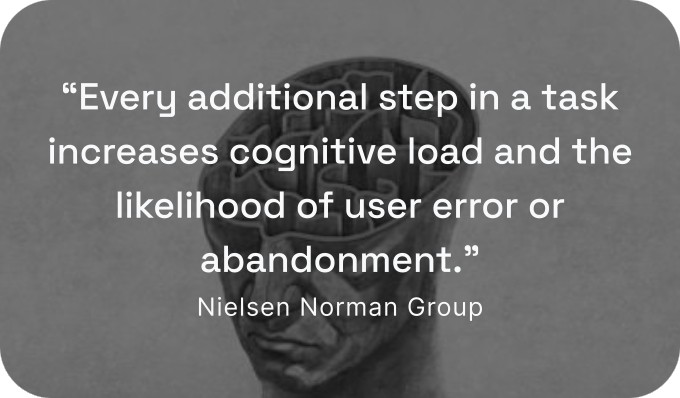
“Every additional step in a task increases cognitive load and the likelihood of user error or abandonment.”
Nielsen Norman Group
Originally completed in 2023, this case study has been reimagined to reflect my current thinking and design approach in 2026.
I identified the shift from phone-based scheduling to digital self-service as a moment where additional steps can increase cognitive load, and designed Sawadee Thai Spa’s first online booking experience to translate human support into a calm, confidence-building, uninterrupted flow.
Designing Trust in First-Time Online Booking
Key Learnings
Designing a first-time system requires more emotional reassurance than optimization work. This project highlighted how much trust is built through clarity, pacing, and language, not just layout or interaction patterns.