Designing for Consistency:
A habit-forming approach to learning
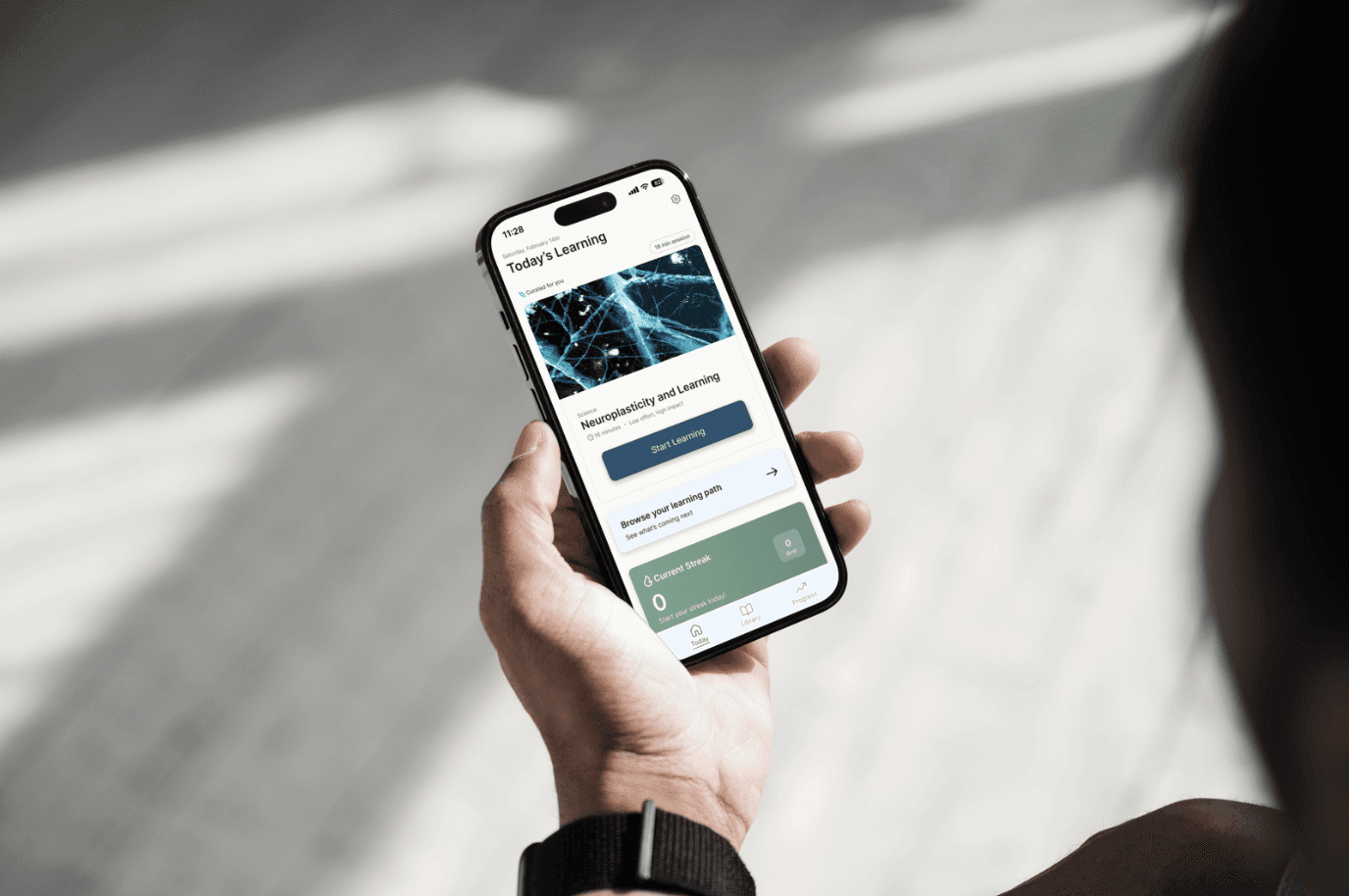
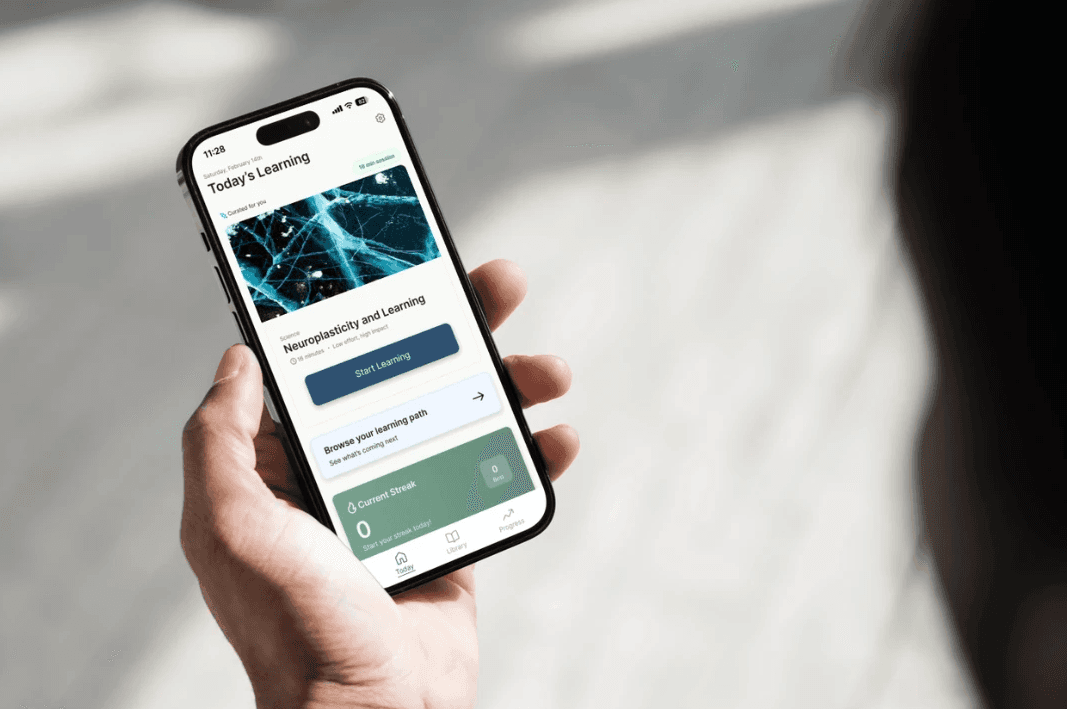
I reframed the problem of “discipline” as one of structure and energy. Daily Learning was designed to make growth feel achievable through small, consistent actions supported by visible progress.
Role: Product Designer | Dates: Nov 2025-Feb 2026
See my Figma file

“You do not rise to the level of your goals. You fall to the level of your systems.”
James Clear
“You do not rise to the level of your goals. You fall to the level of your systems.”
James Clear
Background
Problem
Background
Background
Learning today is more accessible than ever. Articles, podcasts, and online courses are always within reach.
Yet access doesn’t equal consistency. Many people want to keep learning after school, but struggle to turn that intention into a daily habit. Busy schedules, mental fatigue, and too many choices often get in the way.
Learning today is more accessible than ever. Articles, podcasts, and online courses are always within reach.
Yet access doesn’t equal consistency. Many people want to keep learning after school, but struggle to turn that intention into a daily habit. Busy schedules, mental fatigue, and too many choices often get in the way.
Problem
Many self-motivated learners struggle to maintain a consistent learning habit due to time pressure, mental fatigue, and lack of visible progress.
Problem
Many self-motivated learners struggle to maintain a consistent learning habit due to time pressure, mental fatigue, and lack of visible progress.
Many self-motivated learners struggle to maintain a consistent learning habit due to time pressure, mental fatigue, and lack of visible progress.
People want to learn
People want to learn
They lack time
They lack time
Cognitive load is high
Cognitive load is high
Progress feels intangible
Emotional barriers exist
Progress feels intangible
Emotional barriers exist
How might we help busy individuals build a sustainable daily learning
habit without increasing cognitive load?
Interviews revealed generous insights
Interviews revealed generous insights
I interviewed young professionals and students who want to learn consistently but struggle to build the habit. While participants expressed strong curiosity and a desire for growth, their learning behavior was inconsistent and often reactive rather than intentional.
I interviewed young professionals and students who want to learn consistently but struggle to build the habit. While participants expressed strong curiosity and a desire for growth, their learning behavior was inconsistent and often reactive rather than intentional.
1. Learning is part of their identity, but not part of their routine.
1. Learning is part of their identity, but not part of their routine.
Participants see themselves as curious and growth-oriented, yet learning happens in bursts rather than daily. The challenge isn’t motivation, it’s consistency.
Participants see themselves as curious and growth-oriented, yet learning happens in bursts rather than daily. The challenge isn’t motivation, it’s consistency.


2. Mental fatigue is the biggest barrier.
2. Mental fatigue is the biggest barrier.
After work or school, participants feel mentally drained. Even when they want to learn, it feels cognitively demanding compared to passive activities like scrolling.
After work or school, participants feel mentally drained. Even when they want to learn, it feels cognitively demanding compared to passive activities like scrolling.
3. Too much content creates paralysis.
3. Too much content creates paralysis.
Many participants have saved articles, podcasts, and videos but don’t know where to start. The abundance of content leads to decision fatigue and inaction.
Many participants have saved articles, podcasts, and videos but don’t know where to start. The abundance of content leads to decision fatigue and inaction.


Progress feels invisible
Progress feels invisble
After work or school, participants feel mentally drained. Even when they want to learn, it feels cognitively demanding compared to passive activities like scrolling.
After work or school, participants feel mentally drained. Even when they want to learn, it feels cognitively demanding compared to passive activities like scrolling.
5. Emotional barriers reduce self-efficacy.
5. Emotional barriers reduce self-efficacy.
Some participants expressed doubt in their ability to stay consistent. When they break a streak or skip learning, it reinforces the belief that they “never stick with things.”
Some participants expressed doubt in their ability to stay consistent. When they break a streak or skip learning, it reinforces the belief that they “never stick with things.”

Key Takeaway
Participants don’t lack motivation to learn. They lack structure, reinforcement, and low-effort entry points. The opportunity lies in reducing cognitive friction, curating content, and making progress visible to support a sustainable daily learning habit.
Participants don’t lack motivation to learn. They lack structure, reinforcement, and low-effort entry points. The opportunity lies in reducing cognitive friction, curating content, and making progress visible to support a sustainable daily learning habit.
Design principles
Design principles
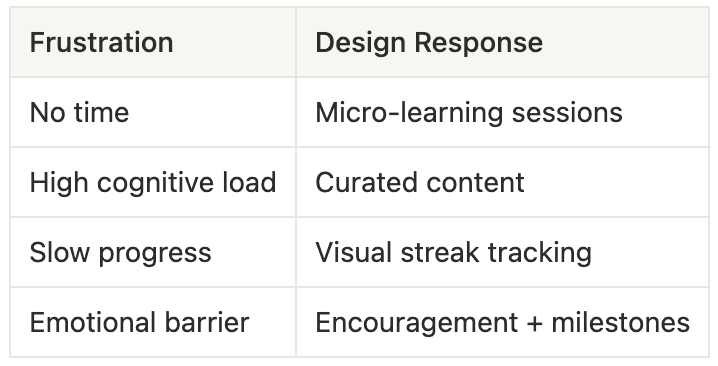
Frustrations and behavioral insights within user interviews helped frame some design principles
Frustrations and behavioral insights within user interviews helped frame some design principles
Desired Behavioral Change: Shift from sporadic learning to daily micro-learning (10–20 minutes).
Desired Behavioral Change: Shift from sporadic learning to daily micro-learning (10–20 minutes).
Feature reasoning
Feature reasoning
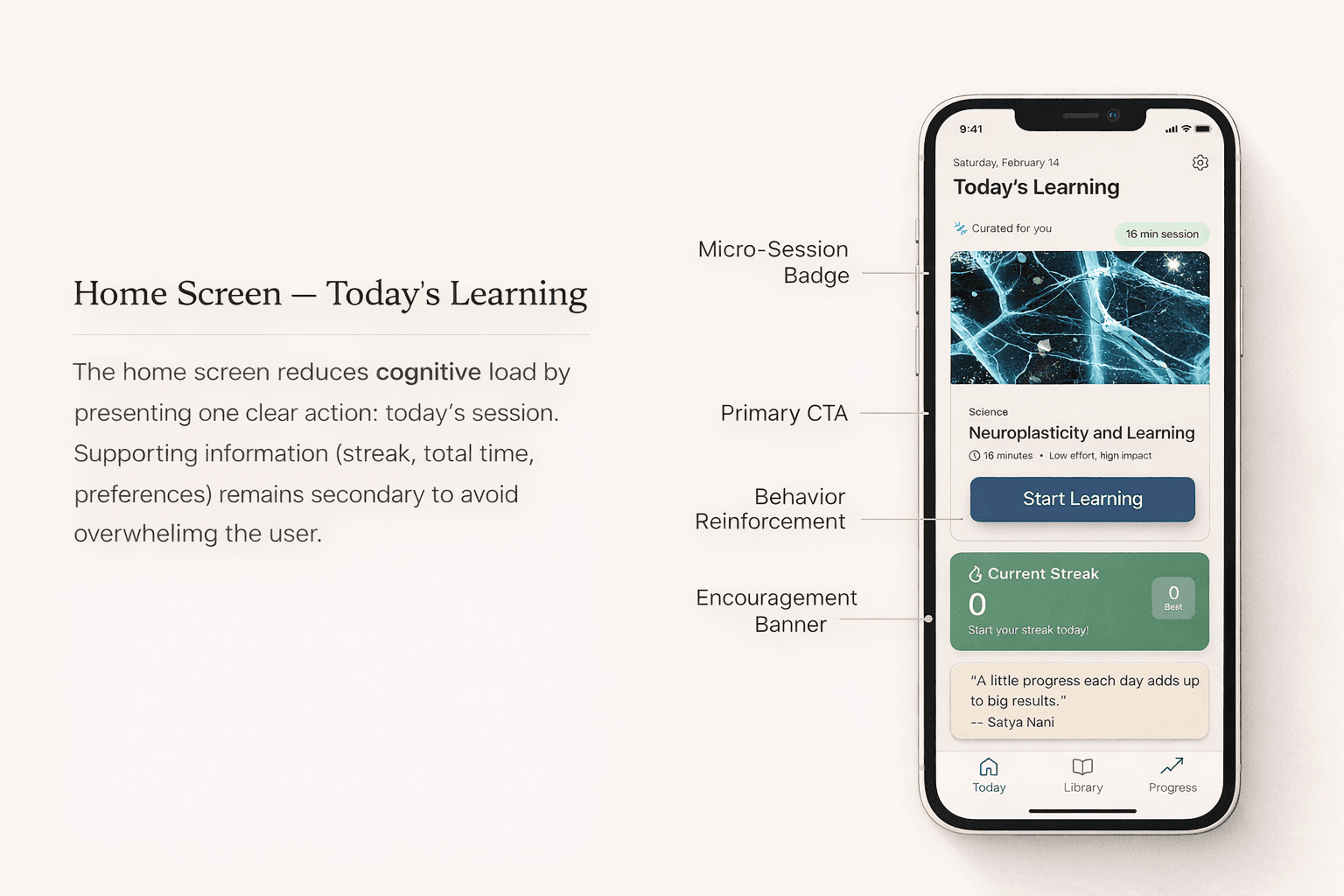
Our users don’t need more motivation, they already wants to learn. What they need is something that fits into their real life. The design focuses on making learning feel lighter, easier to start, and more consistent. Instead of adding pressure, it supports small daily actions and makes progress visible so the habit feels real.
Our users don’t need more motivation, they already wants to learn. What they need is something that fits into their real life. The design focuses on making learning feel lighter, easier to start, and more consistent. Instead of adding pressure, it supports small daily actions and makes progress visible so the habit feels real.
Micro-Learning Scheduler
Micro-Learning Scheduler
Problem addressed: Time pressure + mental fatigue
Design decision: 5–20 minute sessions
Why: Smaller tasks reduce perceived effort and increase completion likelihood
Learning Paths Library
Learning Paths Library
Problem addressed: Decision fatigue
Design decision: Curated content aligned with goals
Why: Reduces cognitive load
Streak & Progress Visualization
Streak & Progress Visualization
Problem addressed: Intangible progress
Design decision: Consecutive day tracking + milestone feedback
Why: Makes effort visible and rewarding
Metrics for Success
70%
Daily Completion Rate
For a 5–20 minute commitment, completion should be relatively high if friction is low.
40%
7-Day Streak Rate
The first week is the most fragile stage of habit formation. If nearly half of users reach 7 days, the system is working.
30%
30-day Retention Rate
For consumer habit products, 20–30% retention at 30 days is considered strong. For a learning app, 30% would indicate meaningful behavioral shift.
70%
Daily Completion Rate
For a 5–20 minute commitment, completion should be relatively high if friction is low.
40%
7-Day Streak Rate
The first week is the most fragile stage of habit formation. If nearly half of users reach 7 days, the system is working.
30%
30-day Retention Rate
For consumer habit products, 20–30% retention at 30 days is considered strong. For a learning app, 30% would indicate meaningful behavioral shift.
85%
Session Completion Rate
Sessions are intentionally short. Drop-off should be minimal.
60min
Weekly Learning Time
On average, active users complete:
5–6 sessions per week
~10–15 minutes per session
This signals consistency, not binge learning.
50%
Streak Recovery Rate
If a user breaks a streak, at least 50% resume within 3 days.
This would directly test my “encouragement without guilt” design principle.
85%
Session Completion Rate
Sessions are intentionally short. Drop-off should be minimal.
60min
Weekly Learning Time
On average, active users complete:
5–6 sessions per week
~10–15 minutes per session
This signals consistency, not binge learning.
50%
Streak Recovery Rate
If a user breaks a streak, at least 50% resume within 3 days.
This would directly test my “encouragement without guilt” design principle.
Reflection
This project shifted how I think about motivation. At first, I assumed the problem was discipline. Through research, it became clear that most people already want to learn. The real barrier is energy and structure.
Designing for habit formation forced me to think beyond features and focus on behavior. Small decisions, like limiting sessions to 5–20 minutes or showing weekly learning time, became more important than adding more content.
If I continued this project, I would test how different types of feedback (streaks vs. time invested vs. milestone messages) affect long-term retention. I’m especially interested in how to encourage consistency without creating pressure or guilt.
This project shifted how I think about motivation. At first, I assumed the problem was discipline. Through research, it became clear that most people already want to learn. The real barrier is energy and structure.
Designing for habit formation forced me to think beyond features and focus on behavior. Small decisions, like limiting sessions to 5–20 minutes or showing weekly learning time, became more important than adding more content.
If I continued this project, I would test how different types of feedback (streaks vs. time invested vs. milestone messages) affect long-term retention. I’m especially interested in how to encourage consistency without creating pressure or guilt.
Purpose-driven at heart,
I build products part of something greater.
Let’s Talk
Let’s Talk
Purpose-driven at heart,
I build products part of something greater.
Designing for Consistency: A habit-forming approach to learning
I reframed the problem of “discipline” as one of structure and energy. Daily Learning was designed to make growth feel achievable through small, consistent actions supported by visible progress.
Role: Product Designer | Dates: Nov 2025-Feb 2026
See my Figma file
Let’s Talk
Purpose-driven at heart,
I build products part of something greater.